










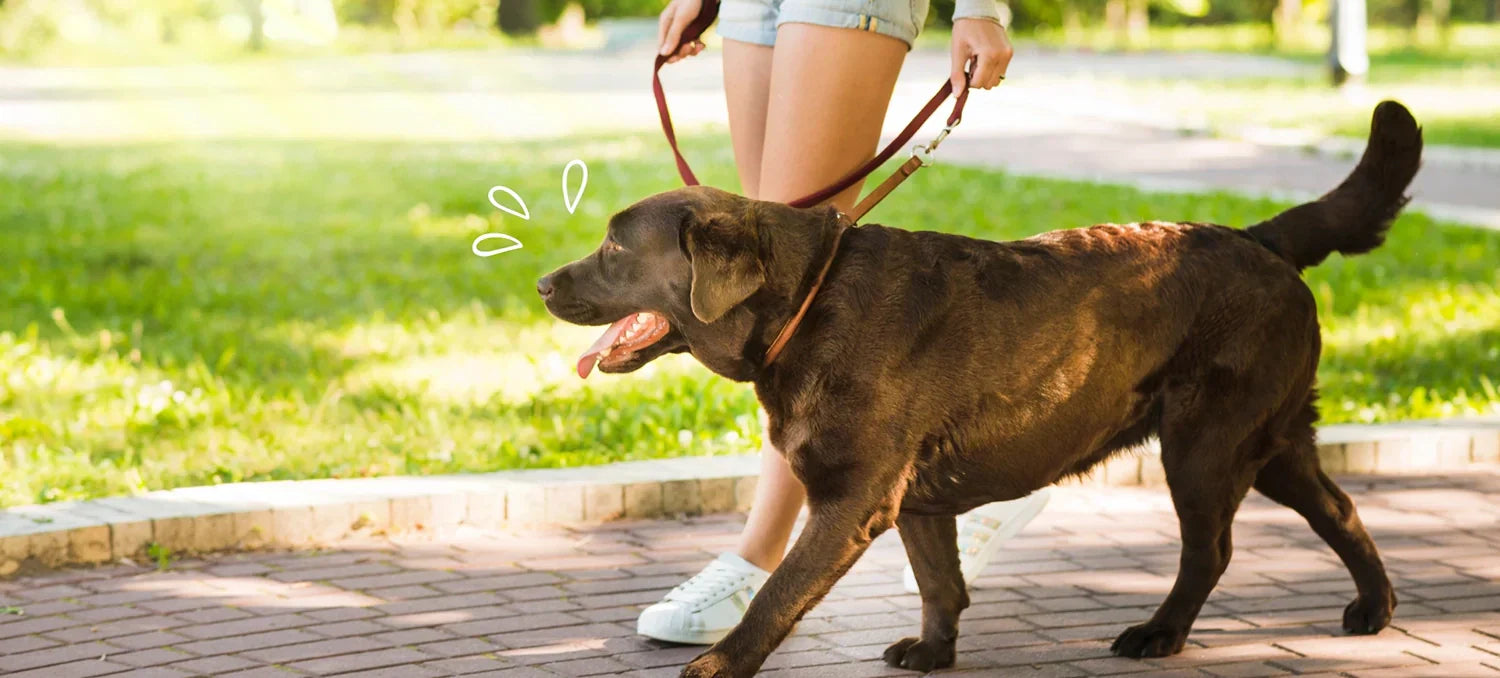
A summer walk sounds harmless.
Leash? Check.
Poop bags? Check.
Dog acting like they have been trapped indoors for 400 years? Obviously.
But before you step outside, there is one thing worth checking first: the ground.
Because even if the weather feels “not that bad” to you, the sidewalk might be a tiny frying pan for your dog’s paws.

The Walk Feels Fine… Until You’re Barefoot
Dogs do not have sneakers.
Their paw pads are tough, but they are not magic. Hot pavement, asphalt, sidewalks, sand, and even artificial turf can heat up fast in the summer sun.
And your dog is much closer to the ground than you are, which means they are feeling more heat from below while also trying to cool themselves down from above.
So while you are thinking, “It’s just a quick walk,” your dog may be thinking, “Why are we crossing lava?”

How to Check If the Ground Is Too Hot
Before heading out, try the simple 7-second test.
Place the back of your hand on the pavement for 7 seconds.
If you cannot comfortably keep your hand there, it is too hot for your dog’s paws.
You can also test it with bare feet, but the hand test is usually easier and less dramatic. Either way, the rule is simple:
If it is too hot for you, it is too hot for them.

Some Surfaces Are Sneakier Than Others
Asphalt is usually the biggest offender because dark surfaces absorb heat quickly.
But it is not the only one.
Concrete, sand, gravel, artificial turf, and dark decks can also get uncomfortable fast. Even grass can feel warm if it has been sitting in direct sun all day.
When possible, choose shaded routes, grassy areas, or cooler walking times. Early morning and later evening are usually much better than the middle of the day.
Your dog does not care if the walk is aesthetic. They care if their feet still work.

Signs Your Dog Is Getting Too Hot
Dogs cannot tell us, “Hey, this walk is giving toaster oven.”
So watch their body language.
Some signs your dog may be too hot include heavy panting, slowing down, pulling toward shade, excessive drooling, red gums, wobbliness, vomiting, or suddenly acting weak or confused.
If your dog seems off, stop the walk, move them somewhere cooler, offer water, and call your vet if you are worried.
Summer walks are not the time to push through. This is not a fitness challenge. This is a dog.

What to Do Instead
If it is too hot outside, skip the long walk and keep it simple.
Do a quick potty break, then bring the fun indoors. Try a frozen treat, lick mat, puzzle toy, sniff game, training session, or a short round of tug.
Mental exercise still counts. Honestly, some dogs are more tired after 10 minutes of using their brain than 30 minutes of pretending to behave on a walk.
Summer walks can still be fun, but they need a little extra common sense.
Check the ground. Bring water. Choose shade. Watch your dog.
And remember: if the sidewalk feels like a panini press, your dog’s paws do not need to be the sandwich.



Leave a comment
All comments are moderated before being published.
This site is protected by hCaptcha and the hCaptcha Privacy Policy and Terms of Service apply.