









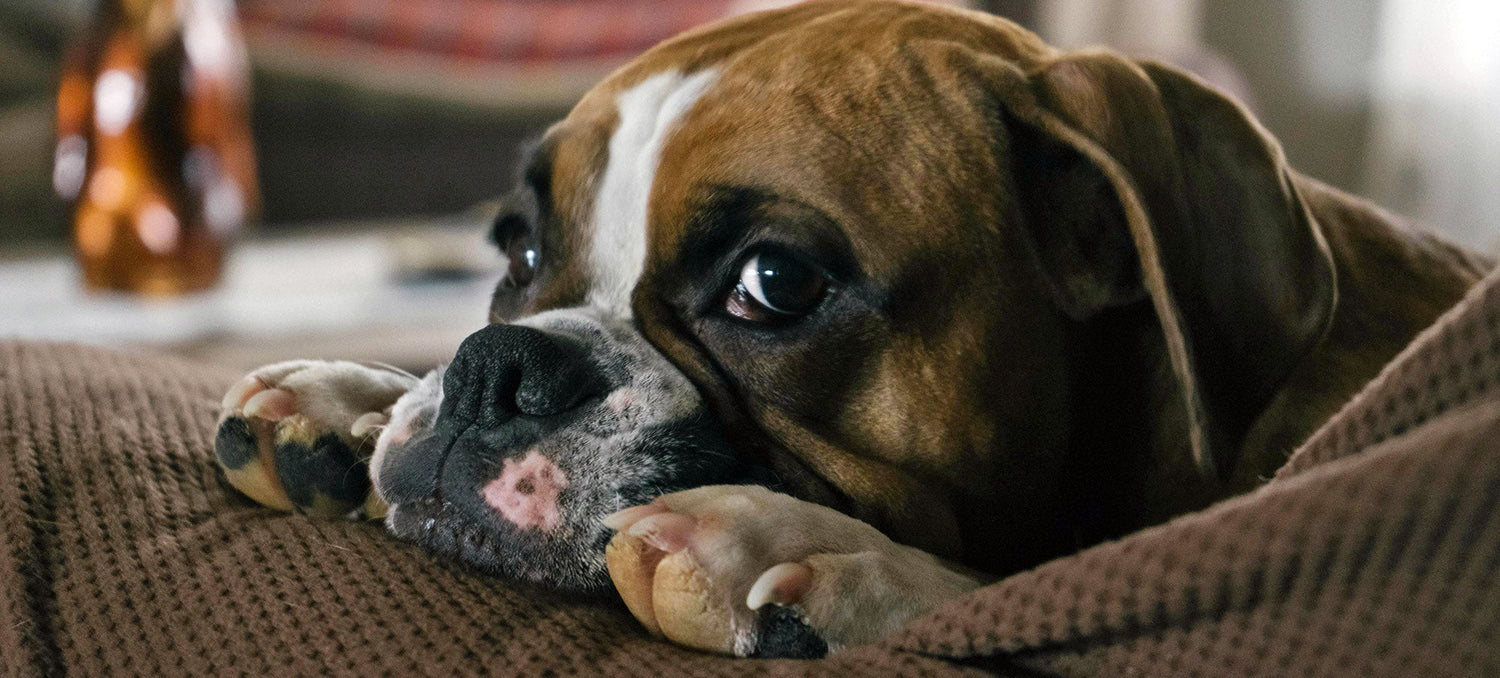
Most lumps are harmless fatty tumors. The problem? You can't know that without testing.
You're petting your dog and BAM - there's a lump that definitely wasn't there last week.
Cue the 11 PM Google spiral and three hours of convincing yourself your dog has a month to live.
Deep breaths. Most lumps on dogs are lipomas: harmless fatty tumors that are basically just squishy deposits of fat under the skin. They're super common, especially in older dogs, and they're about as dangerous as a speed bump.
But here's the catch: you can't diagnose a lump by feel, no matter how much Googling you do or how many "does this look normal" posts you read in Facebook groups.
And that's where people get into trouble.
The "Wait and See" Approach Is Actually Just Procrastination
Let's talk about what most dog owners do when they find a lump:
They monitor it. They keep an eye on it. They tell themselves they'll mention it at the next vet appointment in six months. They convince themselves it's probably nothing.
And look, I get it. Vet visits cost money. You don't want to overreact. Your dog seems totally fine. The lump isn't bothering them.
But here's what you need to understand: the only way to know what a lump is, is to test it.
You cannot diagnose a lump by:
- Googling "dog lumps that move around"
- Asking your friend whose dog also had a lump once
- Seeing if it gets bigger over the next few months
- Vibes
The good news? Testing lumps is usually quick, relatively inexpensive, and way less stressful than the alternative of lying awake at 2 AM wondering if you should have done something sooner.
The Test That Takes Two Minutes and Costs Less Than Brunch
When you bring your dog in for a lump check, here's what typically happens:
Fine Needle Aspiration (FNA): Your vet sticks a tiny needle into the lump, pulls out some cells, smears them on a slide, and looks at them under a microscope.
It takes about two minutes. It usually costs $50-150. Most dogs don't even need sedation because the needle is so small.
The FNA tells your vet if it's:
- A lipoma (fatty tumor, benign)
- A cyst (fluid-filled sac, usually benign)
- An abscess (infection that needs treatment)
- Something suspicious that needs further testing
If the results are inconclusive or concerning, your vet might recommend a biopsy - taking a small piece (or the whole thing) and sending it to a pathologist. It's more involved and usually requires sedation, but it gives you a definitive answer.
Sometimes they'll also recommend imaging like an ultrasound or X-ray to see if the lump goes deeper than it appears.
If It's "Just a Lipoma," Here's What Happens Next
So your vet does an FNA and confirms it's a fatty lump. Great! Crisis averted. Now what?
Now you actually monitor it. And by monitor, I mean pay real attention to it, not just vaguely remember it exists while you're watching TV.
Here's what to watch for:
Rapid growth. Lipomas can grow, but they usually do it slowly over months or years. If it suddenly balloons in size over a few weeks, get it rechecked.
Changes in texture. If it goes from soft and squishy to firm or hard, that's a red flag.
Loss of mobility. Lipomas are usually movable under the skin - you can wiggle them around a bit. If it suddenly feels attached or fixed in place, tell your vet.
Your dog starts caring about it. If they're licking it, favoring that area, or seem uncomfortable when you touch it, something's changed.
Some vets will recommend rechecking lipomas every 6-12 months, especially if your dog is the type that collects them like Pokemon cards (some dogs are just lipoma magnets).
Take a photo. Measure it. Write down the date. Make it easy to tell if something's actually changing.
When Lipomas Aren't So Harmless
Most lipomas are totally benign and never cause problems. They just... exist. Your dog has a fatty lump. Cool.
But there are exceptions:
Infiltrative lipomas grow into surrounding tissues like muscles. They're still benign (not cancerous), but they can interfere with movement and might need surgical removal.
Liposarcomas are the malignant (cancerous) version of lipomas. They're rare, but they exist. This is exactly why testing matters instead of assuming.
Location matters. A lipoma on your dog's side? Probably fine forever. A lipoma pressing on a nerve, restricting leg movement, or in a spot that's going to keep growing and cause issues? That's a problem even if it's benign.
The Lumps That Aren't Lipomas (And Why You Can't Tell By Looking)
Not every lump is a lipoma, and this is exactly why you test instead of guess.
Here are some other common lumps:
Mast cell tumors: These can look completely innocent and harmless but are one of the most common skin cancers in dogs. They need to be removed and tested. Some are low-grade and easy to deal with, others are aggressive. You can't tell by looking.
Sebaceous cysts: Benign, but they can get infected and become a gross, painful mess. Sometimes they need to be drained or removed.
Histiocytomas: Super common in young dogs (usually under 3 years old). They often go away on their own, but should still be checked to confirm that's what they are.
Abscesses: Infected lumps that need antibiotics or draining. They can feel similar to other lumps but require different treatment.
The point is, lumps are not one-size-fits-all. You can't eyeball the difference between a harmless fatty deposit and something that needs immediate attention.
What You Should Actually Do When You Find a Lump
Here's your game plan:
1. Don't panic, but don't ignore it either. Finding a lump doesn't mean your dog is dying. But it does mean you need to get it checked.
2. Call your vet and get it looked at sooner rather than later. "It's probably fine" has burned too many people who waited and regretted it.
3. Get the FNA. It's cheap insurance and gives you actual information instead of months of anxiety and worst-case-scenario thinking.
4. If it's benign, monitor it properly. Take a photo, measure it, note the date, check it regularly. Make it part of your routine when you're petting your dog anyway.
5. If it changes, get it rechecked. New lumps, growing lumps, changing lumps - they all deserve another look. Don't assume it's still the same thing it was six months ago.
6. If your dog is prone to lumps, keep a log. Some dogs are lump factories. Keep track of what's been tested, when, and what the results were. Your vet will thank you.
The Bottom Line
Fatty lumps are common. They're usually harmless. Most of them will never cause a single problem in your dog's entire life.
But "usually" and "most" aren't good enough when it comes to your dog's health.
Testing a lump is quick, relatively cheap, and gives you actual peace of mind instead of the fake peace of mind that comes from telling yourself it's probably nothing.
Skipping the test and hoping for the best? That's not being chill or avoiding overreaction. That's just gambling with higher stakes than necessary.
Your dog can't tell you if something feels wrong. The lump can't announce whether it's benign or malignant. The only way to actually know is to check.
So next time you find a lump, don't just "keep an eye on it." Get it tested. Then you can actually relax instead of wondering.
Your dog is counting on you to be the responsible one. Be the responsible one.



Leave a comment
All comments are moderated before being published.
This site is protected by hCaptcha and the hCaptcha Privacy Policy and Terms of Service apply.